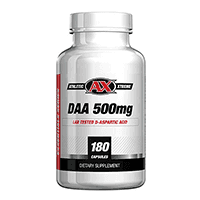
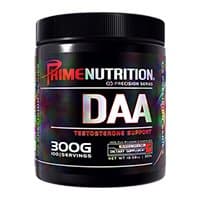
What D-aspartic acid (D-AA) supplements are (and what they are not)
D-aspartic acid (D-AA) is an amino acid sold in powder and capsule form, most often marketed toward men for testosterone support, libido, and gym-adjacent “natural anabolic” language. It is not the same thing as generic protein amino acid blends, and it is not interchangeable with L-aspartic acid—a different stereoisomer with different supplement relevance. If the label is sloppy about naming, assume the brand is sloppy elsewhere too.
Human evidence for meaningful testosterone increases in already healthy young men is not strong or consistent; some studies in selected populations suggest short-term hormonal signal changes, while others fail to replicate the hype you see on labels. That mismatch matters because D-AA is often sold with certainty language that outruns the data.
This guide is educational, not medical advice. If you have hormone-sensitive conditions, take fertility medications, use TRT under medical care, have psychiatric conditions worsened by hormonal swings, or take complex prescriptions, discuss D-AA with a clinician before experimenting—especially if you stack multiple “test support” products.
How to use this guide
The shortlist helps you filter for transparent milligram dosing, credible manufacturing, and brands that do not bury D-AA inside proprietary “hardcore” stacks. The body below helps you run a fair trial: stable training and sleep, conservative dosing, and a calendar long enough to matter—without changing five supplements the same week.
If you are cross-shopping herbal testosterone-marketing lanes, compare label honesty habits with tribulus and tongkat ali—different mechanisms, different evidence textures, same buyer-beware pressure. If your interest is mineral fundamentals sometimes discussed alongside male hormone health, zinc is a separate lane with clearer deficiency logic than amino acid hype.
What to look for in a D-AA supplement
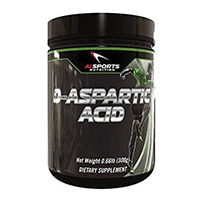
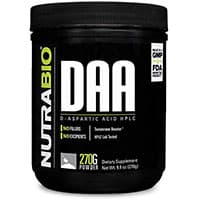
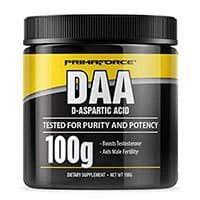
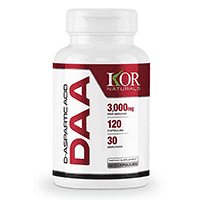
Correct ingredient identity: D-aspartic acid, clearly named
The label should state D-aspartic acid explicitly. If you see vague “aspartic acid” language without the D- form specified, do not guess—buy clarity.
Milligrams per serving and daily totals
Compute what you take per day across all servings. Internet dosing cultures vary; your safe and sensible dose should be individualized—especially if you have medical conditions.
Powder versus capsules: taste, adherence, and precision
Powders allow titration but can taste sharp; capsules simplify travel dosing. Pick the format you will actually use consistently.
Standalone D-AA vs “test booster” blends
Blends with fenugreek, tribulus, maca, and stimulants are common. They make attribution harder and can increase side-effect noise (GI upset, irritability, sleep disruption).
Cycling claims: treat as brand policy, not universal law
Some products recommend cycles; others do not. If you cycle, do it with a reason you can explain—not because a forum post said “receptor reset.”
Who D-AA may be appropriate for (and who should pause)
Often a reasonable fit when
- You have clinician agreement for a conservative trial with monitoring appropriate to your goals.
- You can track sleep, mood, libido changes, and GI tolerance without panicking daily.
- You are not using supplements to avoid real endocrine evaluation when symptoms are significant.
Usually a poor DIY fit when
- You are trying to self-manage low testosterone instead of getting labs and medical guidance.
- You have active prostate cancer history or hormone-sensitive cancer histories without oncology input.
- You stack multiple hormone-marketed products while changing prescriptions.
Compare two D-AA labels in 60 seconds
- Step 1: D-aspartic acid named explicitly?
- Step 2: mg per serving and servings/day?
- Step 3: hidden proprietary blends?
- Step 4: stimulants or other actives included?
- Step 5: third-party testing credibility?
Common mistakes that waste money
- Expecting steroid-era gym results from an amino acid.
- Buying blends without knowing the D-AA dose.
- Ignoring mood and sleep side effects as “just motivation.”
- Changing pre-workout, sleep, and D-AA simultaneously—then misreading outcomes.
- Using D-AA to postpone fertility evaluation when conception timelines matter medically.
What to monitor in the first 3–6 weeks
If your clinician agrees, track energy, sleep quality, irritability, libido subjective changes, acne flares, GI upset, and morning grogginess. Stop and seek guidance for severe mood instability, chest pain, persistent vomiting, or neurologic symptoms—and involve your prescriber before changing hormone therapies based on supplement experiments.
FAQs
Does D-aspartic acid increase testosterone?
Some studies suggest short-term changes in selected populations; evidence in healthy young men is inconsistent. Treat marketing certainty as a red flag, not a feature.
Should D-AA be cycled?
Follow your clinician’s plan if one exists; otherwise follow the product’s conservative guidance and stop if you do not tolerate it.
Can D-AA affect mood?
Some users report irritability or sleep changes. If psychiatric symptoms worsen, stop and seek medical advice.
Is D-AA safe with TRT?
Combination decisions belong to your prescribing clinician—not a supplement ranking page.
Does D-AA help fertility?
Some research exists in male fertility contexts, but self-treatment can conflict with fertility clinic protocols. Do not improvise around prescribed fertility meds.
How long should I trial one product?
If medically appropriate, use one transparent product for several weeks with stable training and sleep before judging.
How we shortlist products on this page
We prioritize correct D-AA identity, honest milligram dosing, manufacturing credibility, and claims that stay inside plausible evidence boundaries for hormone-marketed amino acids. For how we evaluate products across the site, read our methodology.
Bottom line
D-aspartic acid can be a reasonable trial for a narrow set of adults with clear goals and medical context—but it is not a reliable testosterone shortcut for everyone, and it is not a substitute for labs and clinician-directed care when hormones actually matter medically.
If symptoms are persistent—fatigue, low libido, erectile dysfunction, infertility concerns—treat evaluation as the main event and supplements as optional footnotes.