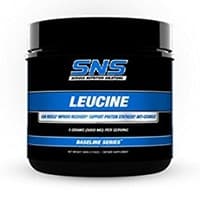
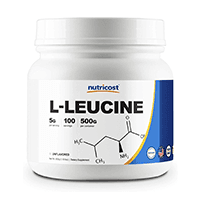
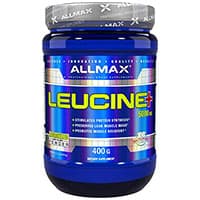
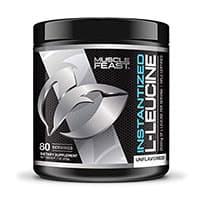
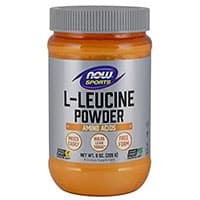
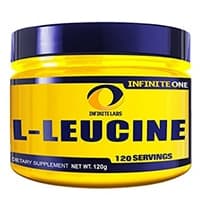
Why people shop leucine supplements
Leucine is one of the three branched-chain amino acids (BCAAs) and a key signal in muscle-protein-synthesis pathways. In plain language: this is a category people usually explore when they are trying to improve training adaptation, preserve lean mass during calorie deficits, or optimize protein timing around workouts and aging-related muscle concerns. The issue is that leucine products are often marketed as if one scoop can replace total protein strategy, and that is where buyers get disappointed.
Leucine can be useful in the right context, but it is not a substitute for adequate daily protein, resistance training quality, sleep, and recovery structure. If those foundations are weak, adding leucine usually adds expense faster than results.
This guide is educational and not medical advice. If you have kidney disease, liver disease, diabetes, pregnancy/breastfeeding considerations, or use medications that affect glucose or amino acid metabolism, discuss leucine supplementation with a qualified clinician before use.
How to use this guide
Use the ranked list as a quality-and-fit filter, not as a universal protocol. Start by identifying your actual use case:
- Muscle retention during calorie deficit
- Post-workout protein strategy support
- Older-adult protein quality optimization in a clinician-informed plan
Then compare products for leucine dose clarity, serving practicality, and overlap with your existing protein powders, EAAs, or BCAA formulas. Many people accidentally duplicate leucine across multiple products and end up with costly stack complexity that does not improve outcomes.
If you are comparing adjacent training-support categories, see our BCAA supplements guide for broader branched-chain formulations, our HMB supplements guide for leucine-metabolite support in body-composition routines, and our creatine supplements guide for performance support through a different mechanism.
For complete product scoring and ranking standards across the site, see our methodology.
Who this category is for (and who should skip the extra spend)
Usually a better fit for
- Users with already solid training and protein habits who want targeted refinement.
- People in calorie deficits trying to protect lean mass while maintaining gym performance.
- Shoppers who can track total daily protein and leucine overlap across all products.
Usually a poor fit for
- People not meeting baseline protein intake from food/protein powders yet.
- Users expecting leucine to compensate for poor training consistency or low sleep.
- Anyone running complicated amino stacks without clear dose tracking.
How to compare two leucine labels in 60 seconds
- Step 1: Confirm ingredient is L-leucine and exact grams per serving.
- Step 2: Confirm serving frequency and practical daily capsule/scoop burden.
- Step 3: Check whether product is standalone or buried in EAA/BCAA blends.
- Step 4: Calculate monthly cost at your true use, not label headline serving.
- Step 5: Check overlap with whey/protein blends that already contribute leucine.
If the label does not clearly disclose active leucine amount, skip it.
What to look for in a leucine supplement
Dose clarity in grams (not just “amino blend”)
Leucine decisions are dosing decisions. Good labels provide explicit grams per serving and practical guidance. Vague “muscle matrix” wording is usually low-value information.
Standalone vs BCAA/EAA blends
Standalone leucine can be useful for precise control. BCAA/EAA products may be more convenient but can obscure how much leucine you are actually adding. If your goal is tight dosing control, standalone products are often easier to manage.
Powder palatability and adherence
Pure leucine can taste bitter. If taste makes you avoid use, your “optimal” protocol fails in practice. Sometimes a slightly less pure but more usable format produces better long-term adherence.
Stack overlap with protein products
Many users forget that high-quality protein powders and whole-food protein already deliver leucine. Supplemental leucine should be planned around that reality, not added blindly on top.
Training context and timing practicality
Protocol timing discussions can become obsessive. In real life, total daily protein adequacy and consistent training quality usually matter more than perfect minute-by-minute timing tricks.
Common mistakes that waste money
- Buying leucine before fixing daily protein intake. Foundation first, refinement second.
- Stacking leucine + BCAAs + EAAs + pre-workout amino blends. Redundant stacks increase cost and confusion.
- Expecting dramatic body recomposition without calorie and training consistency.
- Ignoring GI or taste tolerance. A protocol you cannot follow is not a good protocol.
- Treating one amino acid as a full hypertrophy plan. Program design and recovery still dominate outcomes.
What to monitor in your first 2-4 weeks
If your clinician and coach/dietitian support a trial, track:
- Total daily protein and leucine overlap: avoid accidental over-complication.
- Training quality: performance consistency, not one-session spikes.
- Recovery markers: soreness trends, sleep quality, and next-day readiness.
- Tolerance: GI response and taste adherence issues.
- Body-composition trend context: weekly trend, not day-to-day scale noise.
FAQs
Is leucine better than BCAAs?
Not universally. Leucine is one key BCAA, but broader formulas may suit some routines. The best choice depends on your total protein strategy and dose control preference.
Can leucine build muscle without training?
No meaningful long-term muscle gains happen without progressive resistance training and adequate protein intake.
Do I need leucine if I already use whey protein?
Maybe not. Whey already provides substantial leucine. Additional supplementation may be redundant depending on your total daily intake.
What side effects are commonly discussed?
Most issues are practical: bitterness, occasional GI discomfort, and stack fatigue from too many amino products.
Can I take leucine during a cut?
Many users do, but it should support — not replace — protein adequacy and resistance training consistency.
How long should I trial one product?
If medically appropriate, keep one product and stable routine for several weeks before deciding. Frequent switching weakens conclusions.
Is leucine safe for everyone?
No supplement is universal. People with kidney/liver concerns or complex medical contexts should use clinician guidance.
Bottom line
Leucine supplements can be useful as a targeted refinement tool in strong training/nutrition routines, especially when preserving lean mass is a priority. The best product is usually one with clear grams-per-serving disclosure, practical adherence, and minimal overlap with your existing protein stack.
If your fundamentals are not in place yet, prioritize those first. In this category, disciplined basics beat complicated amino stacking almost every time.