Why people shop sage supplements
Sage supplements typically use extracts from Salvia officinalis (common sage) or related species, and are most often marketed for cognitive support, memory focus, and age-friendly brain wellness. Some products also lean into mood, stress, and menopausal-comfort positioning, which can make this category feel broad and confusing. In practice, sage is best treated as a targeted botanical decision, not a generic “brain booster” purchase.
This category has two common shopper traps: first, confusing culinary sage with standardized extract products; second, stacking sage with several other nootropics at once and then not knowing what caused what. A strong buying process starts with clear goals, transparent labeling, and realistic expectations.
This guide is educational and not medical advice. If you have seizure disorders, take anticonvulsants, use sedatives, have hormone-sensitive conditions, or are pregnant/breastfeeding, discuss sage supplementation with a qualified clinician before use. Essential oil products and concentrated extracts are not interchangeable with cooking herbs.
How to use this guide
Use the ranked list as a quality and clarity filter, not as a treatment plan. Start by deciding your main intent:
- Daytime cognitive support (focus and memory routines)
- Stress and calm cognition support
- Menopausal-symptom support in a broader clinician-guided plan
Once your intent is clear, compare products for extract standardization, serving structure, and stack overlap. If your routine already includes multiple nootropics, simplifying first often produces better clarity than adding another ingredient.
If you’re comparing other cognition-oriented categories, review our bacopa monnieri supplements guide for a different botanical profile, and our ginkgo biloba supplements guide for another memory-focused lane with different interaction context. If your stack includes cholinergic ingredients, our alpha-GPC supplements guide is a useful comparison to avoid redundant nootropic layering.
For complete cross-site ranking criteria and editorial standards, see our methodology.
Who this category is for (and who should skip self-experiments)
Usually a better fit for
- Users who want a single-botanical cognitive support trial with clear dosage.
- People willing to keep sleep, caffeine, and routine stable long enough to evaluate response honestly.
- Shoppers who prioritize extract transparency over “brain blend” marketing.
Usually a poor fit for unsupervised use
- People with seizure history or medications where botanical interactions are relevant.
- Users already running complex stimulant/nootropic stacks.
- Anyone expecting immediate major memory change from one supplement in a high-stress, low-sleep routine.
How to compare two sage labels in 60 seconds
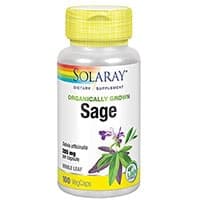
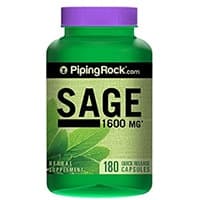
- Step 1: Confirm species and plant part (e.g., Salvia officinalis leaf extract).
- Step 2: Confirm extract amount per serving and any standardization details.
- Step 3: Check whether it is standalone or buried in a proprietary nootropic blend.
- Step 4: Check timing instructions (daytime vs evening) and whether that fits your routine.
- Step 5: Check overlap with caffeine/cholinergic/stimulant products already in your stack.
If a product does not clearly disclose active amount and format, skip it.
What to look for in a sage supplement
Species and extract transparency
Reliable products identify the botanical clearly and provide meaningful dose information. Generic “sage complex” labels are less useful for comparison and often harder to trust.
Standardization claims (when listed)
Some formulas reference specific phytochemical markers or extraction ratios. These details can be helpful if they are paired with clear serving amounts and practical dose guidance.
Single ingredient vs “focus matrix” blends
Sage is frequently combined with caffeine, choline donors, ginkgo, and amino acids. Blends may be convenient but can increase side-effect noise and reduce interpretability. If your goal is to evaluate sage itself, start with standalone formulas.
Tolerance and timing fit
Most users place sage in daytime routines. If you notice overstimulation or sleep disruption, timing and stack complexity may need adjustment before judging product quality.
Manufacturing quality signals
Look for reasonable manufacturing transparency, lot traceability, and straightforward quality language. In cognition categories, label honesty matters as much as ingredient choice.
Common mistakes that waste money
- Adding sage to an already overloaded nootropic stack. More ingredients can mean less clarity, not better outcomes.
- Treating cooking herbs and concentrated extracts as equivalent. Supplement potency and use context are different.
- Ignoring caffeine overlap. Sage blends plus coffee/pre-workout can produce avoidable jitter or poor sleep.
- Expecting instant “memory upgrade” effects. Sleep quality, stress load, and workload design still drive most daily cognition.
- Skipping medical review when symptoms are significant. Cognitive concerns, mood changes, or neurological symptoms need proper assessment.
What to monitor in your first 2-4 weeks
If your clinician agrees with a trial, track:
- Focus quality: task completion, mental fatigue, and attention stability.
- Mood and anxiety: calmness vs irritability or overstimulation.
- Sleep effects: onset, quality, next-day clarity.
- GI and tolerance: any recurring discomfort or headaches.
- Stack simplicity: avoid adding new nootropics mid-trial to keep feedback clean.
FAQs
What is sage used for in supplements?
Sage is commonly marketed for cognitive support, memory, and calm-focus routines. Some products also target menopausal comfort. It is a supplement category, not a treatment replacement for neurological or psychiatric conditions.
Is sage the same as salvia products sold for other purposes?
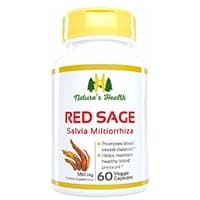
No. Supplement products should clearly identify species and intended use. Do not assume all “salvia” products are equivalent.
Can I take sage daily?
Some users do, but daily use should align with your health context, medication profile, and stack complexity. If side effects persist, reassess with a clinician.
What side effects are commonly discussed?
Some users report headache, GI discomfort, restlessness, or sleep changes depending on dose and stack context. Responses vary by person and formulation.
Can sage be combined with alpha-GPC or ginkgo?
Many nootropic products combine these ingredients, but combinations increase complexity. Introduce one major variable at a time for clearer evaluation.
How long should I trial one product?
If medically appropriate, keep one product and routine stable for several weeks before deciding. Frequent product hopping weakens decision quality.
Can sage replace stress management basics?
No. Sleep, workload design, exercise, and mental-health support usually matter more than any single capsule.
Bottom line
Sage supplements can be a useful category for people seeking targeted cognitive support, but the best outcomes come from transparent formulations and disciplined stack design. Choose clear labels, keep routines stable, and evaluate with practical metrics rather than hype expectations.
If symptoms are severe, progressive, or clinically complex, prioritize professional evaluation first and use supplements only as adjuncts in a broader plan.