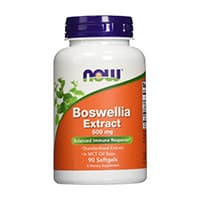
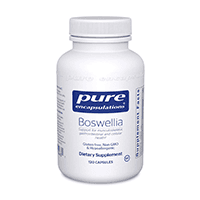
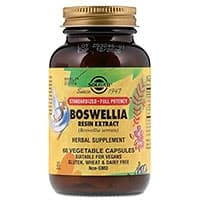
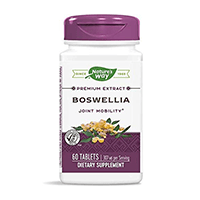
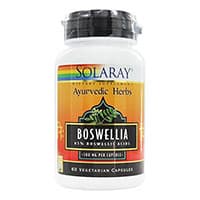
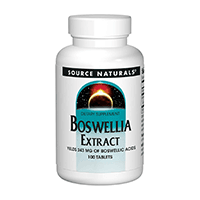
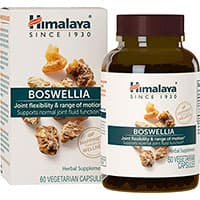
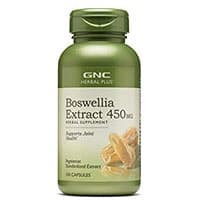
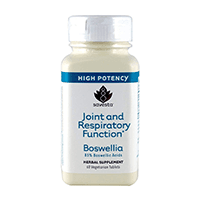
What boswellia supplements are (and what AKBA marketing actually means)
Boswellia usually refers to gum-resin extracts from Boswellia serrata (related to frankincense species), sold for joint comfort, exercise recovery, and “healthy inflammatory balance” marketing. Many quality products standardize for boswellic acids, and premium positioning often highlights AKBA (acetyl-11-keto-β-boswellic acid) as a marker compound.
That alphabet soup matters because boswellia is not one molecule—it is a resin chemistry set. Two capsules can both say “boswellia” while differing in extraction, boswellic acid percentage, AKBA fraction emphasis, and whether the dose is standalone or lost inside a proprietary joint blend.
This guide is educational, not medical advice. If you are pregnant or breastfeeding, take anticoagulants, have gallbladder disease, or have inflammatory arthritis or bowel disease that requires medical management, discuss boswellia with a clinician before starting—especially if you already take multiple supplements and prescriptions.
How to use this guide
The shortlist helps you filter for honest resin extract disclosure, credible manufacturing, and brands that do not hide weak boswellia inside giant “mobility matrices.” The body below helps you match boswellia to your goal (knee OA-style comfort support versus vague wellness language) and run a trial long enough to be fair.
If you are comparing popular joint and inflammation-adjacent botanicals, turmeric/curcumin is the most common cross-shop (different active chemistry, different absorption-helper controversies). If your cart drifts into immune-active botanicals with similar resin stories, cat’s claw is a useful contrast for how different plants get similar aisle positioning with different interaction cautions. For GI-tolerant “kitchen herb” comparisons in digestive comfort stacks, ginger is a different mechanism lane that still teaches good label habits.
What to look for in a boswellia supplement
Boswellic acids per serving (and whether AKBA is quantified)
Prefer labels that state total boswellic acids per serving and clarify AKBA content when the brand uses AKBA as a selling point. If the label only says “boswellia extract” with a big milligram number and no acid disclosure, cross-brand comparison is guesswork.
Extract ratio honesty
Resin extracts vary in concentration. “Equivalent to raw resin” language is only helpful when it maps to what you swallow daily.
Standalone boswellia vs joint stacks
Many products combine boswellia with turmeric, collagen, glucosamine, MSM, and more. Stacks can be convenient, but they make attribution harder. If your goal is to evaluate boswellia itself, simpler formulas usually produce clearer feedback.
GI tolerance and dosing strategy
Some users get mild GI upset with resin extracts. Taking with food and conservative titration are practical first levers if your clinician agrees to a trial.
Manufacturing and contaminant seriousness
Resin extracts deserve identity testing and sensible contaminant screening. Prefer meaningful QA language over decorative badges.
Who boswellia is often a fit for (and who should be cautious)
Often a reasonable fit when
- You want a structured trial for joint comfort alongside stable training and sleep habits.
- You can track GI tolerance and stop early if symptoms escalate.
- You are not using supplements to postpone evaluation of hot, swollen joints or systemic symptoms.
Use extra caution when
- Pregnancy or breastfeeding without clinician-directed choices.
- Active gallbladder disease or history of symptomatic gallstones.
- Anticoagulant/antiplatelet polypharmacy without pharmacist review.
Compare two boswellia labels in 60 seconds
- Step 1: Boswellia serrata resin extract stated?
- Step 2: Total boswellic acids mg per serving?
- Step 3: AKBA mg per serving if AKBA is marketed heavily?
- Step 4: Servings/day and monthly cost at your dose?
- Step 5: Proprietary blends hiding the boswellia fraction?
Common mistakes that waste money
- Buying AKBA hype without per-serving AKBA math.
- Changing training volume, NSAID use, and boswellia the same week.
- Expecting cartilage regeneration from a resin extract.
- Ignoring persistent joint swelling as “normal aging.”
- Stacking five joint products and blaming one ingredient for headaches.
What to monitor in the first 4–8 weeks
If your clinician agrees, track joint pain patterns with consistent activity levels, morning stiffness duration, GI comfort, and headache. Stop for severe allergic symptoms, black stools, severe abdominal pain, or yellowing skin/eyes—and seek urgent care when appropriate.
FAQs
Does boswellia work for knee osteoarthritis?
Some human trials suggest benefit for select outcomes in certain populations; evidence is not uniform across products because extracts differ. A fair personal trial uses one transparent extract for enough weeks to matter.
Is boswellia the same as frankincense?
They are related resin traditions, but supplement labels should specify Boswellia serrata for what most joint products intend. Do not buy generic “incense energy” branding without species clarity.
Can boswellia upset my stomach?
GI upset is possible; food pairing and dose adjustments help some users.
Can boswellia interact with blood thinners?
If you take anticoagulants or antiplatelet medications, involve a pharmacist—especially around procedures.
Is boswellia safe in pregnancy?
Do not self-prescribe; pregnancy is not the context for resin-experiment stacks.
How long should I trial one product?
Joint comfort trials often need multiple weeks. Use one product with stable habits before switching brands.
How we shortlist products on this page
We prioritize transparent boswellic acid disclosure (including AKBA when marketed), manufacturing credibility, and claims that match plausible evidence for joint comfort support—not miracle cartilage promises. For how we evaluate products across the site, read our methodology.
Bottom line
Boswellia can be a reasonable option for some adults seeking joint comfort support when labels are honest about resin extract chemistry and dosing. The best purchases are usually standalone extracts or thoughtfully disclosed stacks—not mystery matrices priced like prescriptions.
If joints are hot, swollen, deforming, or accompanied by systemic symptoms, prioritize rheumatology evaluation first—then decide whether any supplement belongs in the plan.