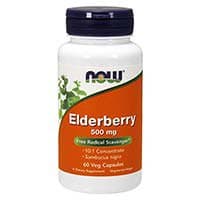
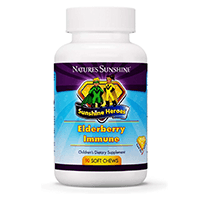
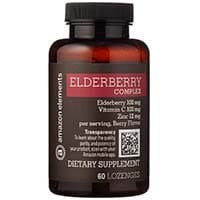
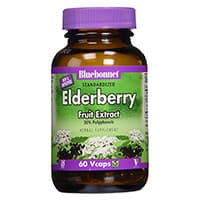
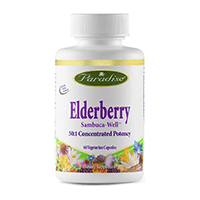
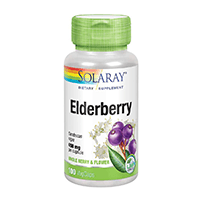
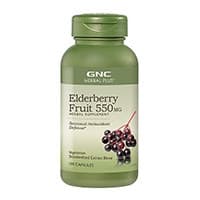
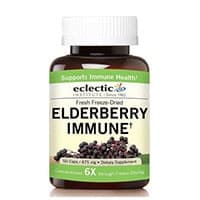
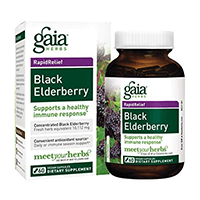
What elderberry supplements are (and why format matters more than hype)
Elderberry supplements are usually made from extracts of Sambucus nigra (black elder) fruit, sold as syrups, gummies, lozenges, capsules, and powders. The category exploded because elderberry feels intuitive for “immune season” shopping: a familiar berry, a long folk-use story, and packaging that promises cozy defense against winter crud.
The practical buying problem is different: added sugar in syrups and gummies, weak extract doses hidden in blends, and unrealistic expectations about what any berry extract can do during an actual viral illness. Elderberry can be a reasonable seasonal tool for some adults, but it is not a substitute for medical care when symptoms are severe, persistent, or high-risk.
This guide is educational, not medical advice. If you have autoimmune disease, take immunosuppressants, are pregnant or breastfeeding, or have diabetes and need tight glucose control, discuss elderberry with a clinician—especially before combining multiple “immune” products.
How to use this guide
Use the ranked shortlist to filter for extract transparency, sane sugar loads in liquids, credible manufacturing, and brands that do not market elderberry like a guaranteed infection shield. Use the body below to match your routine reality: whether you will actually take syrups consistently, whether capsules fit travel better, and whether you are accidentally double-covering vitamin C and zinc across several products.
If you are cross-shopping seasonal botanicals, echinacea is the closest aisle neighbor but with different species/part label pitfalls. If you are building a mineral baseline many people discuss for immune support, zinc is a separate lane with clearer deficiency logic for some users. If your pantry already includes fizzy drinks, multis, and powders, sanity-check overlap with vitamin C so you are not megadosing accidentally across categories.
What to look for in an elderberry supplement
Extract identity and honest “equivalent” language
Look for clear botanical identity (Sambucus nigra) and whether the product is a fruit extract versus a vague “berry blend.” If the label leans on “equivalent to X grams of fruit” without clarifying extract strength, treat it as marketing until the math makes sense.
Milligrams per serving you can compare
You should be able to compute how much elderberry extract you take per day and what that costs per month. If you cannot, the product is not designed for comparison shopping—it is designed for impulse buys.
Syrups and gummies: read the Nutrition Facts, not the front label
Liquids and gummies can be convenient—and they can also deliver surprising sugar per serving. If you are buying elderberry for nightly use, sugar load can become the story your body notices more than polyphenols.
Standalone elderberry vs immune shotgun blends
Many formulas stack elderberry with vitamin C, zinc, echinacea, propolis, and more. Blends are not automatically bad, but they make attribution harder and increase the odds you are doubling up elsewhere in your routine.
Manufacturing and contaminant seriousness
Fruit extracts still deserve identity testing and sensible contaminant screening. Prefer brands that describe testing scope meaningfully, not generic “lab tested” badges.
Who elderberry is often a fit for (and who should be cautious)
Often a reasonable fit when
- You want a short, structured seasonal trial with a transparent extract label.
- You can track sugar intake if choosing syrups or gummies.
- You are not using supplements to avoid vaccines or medical care your clinician recommends.
Use extra caution when
- Immunosuppression or complex autoimmune management—this is specialist input territory.
- Diabetes where syrup products can disrupt glucose control.
- Persistent fever, severe shortness of breath, chest pain, confusion, or other emergency symptoms—seek urgent care, not stronger supplements.
Compare two elderberry labels in 60 seconds
- Step 1: Sambucus nigra fruit extract stated clearly?
- Step 2: mg extract per serving and servings per day?
- Step 3: If syrup/gummy, grams of added sugar per serving?
- Step 4: Hidden proprietary blends?
- Step 5: Other actives you may already take elsewhere (vitamin C, zinc)?
Common mistakes that waste money
- Buying candy-strength gummies and expecting clinical-tier outcomes.
- Stacking three elderberry products plus a multivitamin and an “immune shot.”
- Switching brands every few days during the same illness.
- Ignoring red-flag symptoms because the bottle says “natural defense.”
- Paying syrup prices for tiny extract fractions without reading the facts panel.
What to monitor during a 10–14 day window (or per clinician plan)
If your clinician agrees, track symptom course alongside tolerance: sore throat comfort, congestion severity, sleep, GI upset, and glucose readings if you use syrups and have diabetes. Stop for severe rash, facial swelling, wheezing, or breathing difficulty—and seek urgent care for rapidly worsening respiratory distress.
FAQs
Does elderberry prevent colds or flu?
Evidence is mixed and depends on product type, dose, timing, and study quality. A realistic expectation is modest support for some users in some contexts—not a force field against respiratory viruses.
Does elderberry shorten illness?
Some trials suggest small changes for some outcomes; others are less convincing. If you try it, judge it with stable habits and a clear start/stop plan rather than cherry-picking one good night.
Is elderberry syrup safe for kids?
Pediatric use should be clinician-directed, especially for young children, underlying conditions, sugar load, and allergy history.
Can elderberry interact with medications?
The biggest practical concern is immunosuppressive therapy and complex polypharmacy. Bring the exact product label to a pharmacist if your medication list is not simple.
Is raw elderberry safe?
Commercial supplements are not the same as foraging raw plant parts; manufacturing matters. Do not treat random internet preparation advice as interchangeable with tested products.
Are gummies or syrups better?
Adherence wins: the best format is the one you will use consistently at a dose that matches the label. If sugar is a problem for you, capsules may be the better compromise.
How we shortlist products on this page
We reward transparent extract disclosure, reasonable sugar loads where applicable, manufacturing credibility, and claims that stay inside plausible evidence boundaries. For how we evaluate products across the site, read our methodology.
Bottom line
Elderberry can be a reasonable seasonal option for some adults when labels are honest, sugar is controlled (if you choose liquids or gummies), and expectations stay grounded. It is not a replacement for urgent care when symptoms are severe—and it is not a substitute for indicated prevention strategies your clinician recommends.
If you trial elderberry, pick one transparent product, watch for hidden stacking across your supplement pile, and treat worsening illness as a medical signal—not a reason to double the dose.