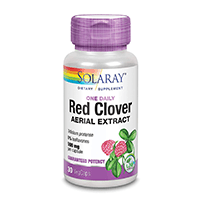
Why people shop red clover extract supplements
Red clover extract (typically from Trifolium pratense) is most often marketed for women’s health, especially around menopausal-transition symptom support. The ingredient is usually positioned as a source of isoflavones (plant compounds with estrogen-like signaling behavior in some contexts), which is why this category attracts both high interest and high confusion. Some shoppers are looking for support with hot-flash discomfort, others want broader healthy-aging support, and many are trying to avoid hormone-therapy decisions without fully understanding where red clover may or may not fit.
In practice, this category rewards careful label reading more than marketing confidence. Two products can both say “red clover” and still differ meaningfully in isoflavone standardization, extraction quality, and daily serving logic. If you want a useful trial, clarity matters: exact active disclosure, realistic dose schedule, and a plan for monitoring tolerance.
This guide is educational and not medical advice. If you have a history of hormone-sensitive conditions (including breast, uterine, or ovarian concerns), clotting disorders, liver disease, or use anticoagulants/hormone therapy, talk with a qualified clinician before starting red clover. Pregnancy and breastfeeding are not self-experiment contexts for this category.
How to use this guide
Use the ranked products as a quality and fit filter, not as a treatment plan. Start by deciding your actual goal:
- Menopausal symptom support in a broader lifestyle and clinician-guided plan
- General wellness trial with conservative dose and clear monitoring
- Alternative comparison versus other menopause-adjacent supplement categories
Then choose a product that matches your routine. If a label requires multiple doses at times that don’t fit your day, adherence will fail and the trial will feel unhelpful regardless of ingredient quality.
Many readers compare red clover with other symptom-support categories before deciding. For another common menopause-focused botanical lane, review black cohosh supplements. If your symptom profile is more breast-comfort/skin-oriented in your own research path, see evening primrose oil supplements. If your shopping journey overlaps with stress, vitality, and libido-oriented adaptogenic choices, maca supplements provide a useful contrast. These categories overlap in shopper intent, but they are not interchangeable in mechanism or safety context.
For complete criteria behind product ranking quality across the site, see our methodology.
Who this category is for (and who should avoid DIY trials)
Usually a better fit for
- Users who want a structured, conservative trial with one clear symptom target.
- People willing to keep sleep, caffeine, alcohol, and stress routines stable during evaluation.
- Shoppers who prioritize standardized extract labels over “women’s balance” marketing language.
Usually a poor fit for unsupervised use
- Anyone with hormone-sensitive cancer history or unresolved abnormal bleeding.
- Users on anticoagulants or hormone therapies without explicit clinician clearance.
- People expecting one botanical to replace full menopausal care, sleep strategy, and mental-health support.
How to compare two red clover labels in 60 seconds
- Step 1: Confirm species and source: Trifolium pratense extract, not vague “phyto blend.”
- Step 2: Confirm extract amount and isoflavone disclosure per serving.
- Step 3: Check daily serving frequency and whether you can realistically follow it.
- Step 4: Check blend complexity (red clover solo vs mixed hormone/herbal stack).
- Step 5: Check medication-context warnings and quality/testing transparency.
If the product hides active details behind proprietary wording, skip it. This category is not the place to guess.
What to look for in a red clover supplement
Isoflavone standardization clarity
Products in this lane often emphasize isoflavones, but the label quality varies. Useful products disclose both total extract amount and what those standardization claims mean per serving. Vague “estrogen balance support” language without numbers should be treated as low-information marketing.
Single-ingredient vs multi-herb formulas
Some products combine red clover with black cohosh, dong quai, chasteberry, or adaptogens. Blends can be convenient, but they make side-effect and efficacy interpretation harder. If this is your first trial, standalone red clover usually gives cleaner feedback.
Dose realism and duration expectations
Most shoppers overestimate short-term effects. Menopause-adjacent routines often need consistency over weeks, not days, before you can evaluate fit. If your plan is chaotic, your results will be chaotic too.
Medication and bleeding-risk context
This is a high-priority safety check. If you are on anticoagulants, antiplatelet medication, or hormonal treatment, do not self-stack based on social content. Bring the exact product label to your clinician or pharmacist.
Quality and manufacturing transparency
Look for sensible quality disclosures and transparent sourcing/manufacturing language. In hormone-adjacent categories, label integrity is part of safety, not just “premium branding.”
Common mistakes that waste money (or create risk)
- Using red clover as a substitute for medical evaluation. Persistent heavy bleeding, severe mood changes, or significant sleep decline need clinical review.
- Stacking multiple menopause herbals at once. Harder to interpret, higher chance of tolerability confusion.
- Ignoring interaction context. Especially relevant with blood thinners and hormone therapies.
- Expecting immediate symptom resolution. Real-world adaptation is usually gradual and variable.
- Changing supplements every week. Product hopping destroys signal quality and drives frustration.
What to monitor in your first 2-4 weeks
If your clinician supports a trial, track these practical markers:
- Primary symptom target: hot flash frequency/intensity, sleep disruption patterns, and daytime comfort.
- Mood and stress resilience: irritability, anxiety changes, and emotional stability.
- Sleep quality: onset, nighttime waking, and next-day function.
- Tolerance: GI changes, headaches, unusual bleeding changes, or other concerning symptoms.
- Adherence: whether the protocol is sustainable without routine friction.
Any concerning bleeding pattern, chest symptoms, severe headaches, or major mood deterioration warrants prompt clinical follow-up.
FAQs
What is red clover extract used for?
Most products are marketed for menopausal symptom support and women’s wellness routines, largely through isoflavone-related positioning. It is not an approved replacement for hormone therapy or specialist care.
Is red clover the same as black cohosh?
No. They are different botanicals with different active-compound profiles, safety context, and typical use patterns.
Can I take red clover with hormone therapy?
That is a clinician-level decision. Do not combine hormone-active strategies without professional review.
What side effects are commonly discussed?
Some users report GI discomfort, headache, or cycle/bleeding pattern changes. Responses vary by dose, formulation, and individual context.
How long should I trial one product?
If medically appropriate, keep one transparent product and stable routine for several weeks before deciding. Frequent switching weakens conclusions.
Can red clover replace lifestyle support for menopause?
No. Sleep quality, stress management, resistance training, protein intake, and clinical care still drive most outcomes.
Is “higher isoflavone” always better?
Not necessarily. Better means better fit for your context, tolerance, and clinician guidance — not just a bigger number on the front label.
Bottom line
Red clover extract can be a useful option for some users in menopause-adjacent routines, but this is a category where cautious planning beats trend-chasing. The best product is usually the one with clear isoflavone disclosure, practical dosing, and a safety profile that matches your personal medical context.
Keep the trial simple, track meaningful symptoms, and avoid stacking multiple hormone-adjacent botanicals at once. If your symptoms are severe or medically complex, clinician-guided care comes first, with supplements as carefully chosen adjuncts.