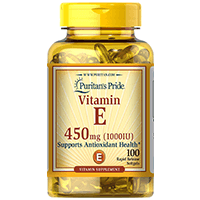
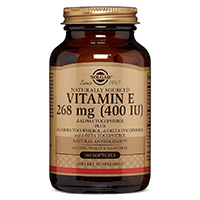
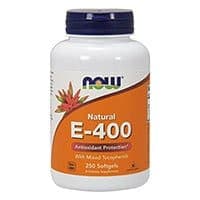
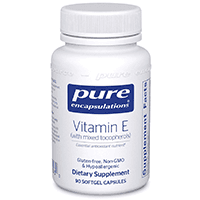
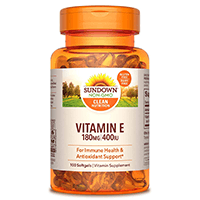
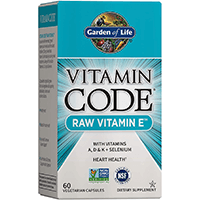
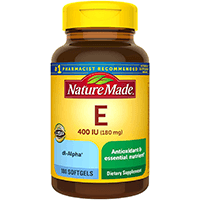
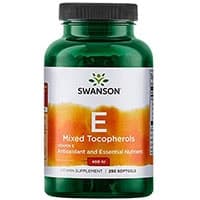
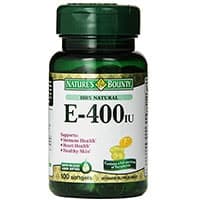
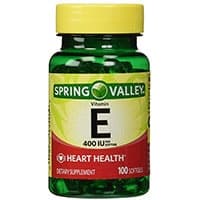
Why people shop vitamin E supplements
Vitamin E is one of the most familiar antioxidant nutrients, but it is also one of the easiest categories to buy poorly. Most labels talk about “cell protection” and “free-radical support,” yet many do not clearly explain which form of vitamin E you are getting, how much is actually active, or how it fits with the rest of your stack. For everyday users, the best vitamin E product is rarely the one with the loudest antioxidant claim — it is the one with clear form labeling, sensible dosing, and a routine you can use consistently without creating overlap problems.
This guide is educational and not medical advice. If you use anticoagulants, antiplatelet medication, have bleeding disorders, upcoming surgery, or significant cardiovascular disease, discuss vitamin E supplementation with a qualified clinician before use. High-dose antioxidant supplementation can carry tradeoffs in some contexts, and “more antioxidant” is not always better.
Below the shortlist, you’ll find practical label checks, decision frameworks, and common mistakes so you can compare products with less guesswork and fewer expensive missteps.
How to use this guide
Use the ranked products as a quality and transparency filter, not as a treatment plan. Start by deciding what you actually want from this category:
- Basic nutrient coverage in a conservative daily range
- Stack support in a broader antioxidant routine
- Form-specific preference (e.g., mixed tocopherols vs alpha-only products)
Once your goal is clear, compare labels for exact form, IU/mg conversion clarity, and realistic serving frequency. This step matters because vitamin E products often look interchangeable at a glance while differing meaningfully in composition and dose intensity.
If you’re building a broader antioxidant routine, it helps to compare adjacent categories with different mechanisms. For ascorbic-acid-first support, see our vitamin C supplements guide. For trace-mineral antioxidant enzyme support, review our selenium supplements guide. If your stack is more cardio-energy focused, our CoQ10 supplements guide is another useful comparison. These categories overlap in “antioxidant” language but are not substitutes for one another.
For full ranking logic and product-evaluation standards used across the site, see our methodology.
Who this category is for (and who should skip it)
Usually a better fit for
- Users who want structured, moderate nutrient support and can keep intake consistent.
- People with low dietary variety who are using supplements to fill plausible nutrient gaps (with clinician context where needed).
- Shoppers who care about form transparency (not just front-label antioxidant claims).
Usually a poor fit for unsupervised high-dose use
- Anyone on anticoagulants or antiplatelet therapy without clinician review.
- People stacking multiple antioxidant complexes without checking total overlap.
- Users expecting one nutrient to replace diet quality, medical care, or risk-factor management.
How to compare two vitamin E labels in 60 seconds
- Step 1: Check form. Is it natural-source alpha-tocopherol, synthetic form, mixed tocopherols, or a blend with tocotrienols?
- Step 2: Check dose clarity. Is it listed in IU, mg, or both — and is conversion clear?
- Step 3: Check serving logic. One daily softgel vs multiple doses; can you follow it?
- Step 4: Check overlap. Is vitamin E already in your multivitamin, fish-oil blend, or “skin/hair” formula?
- Step 5: Check quality signals. Reasonable manufacturing/testing transparency and clean excipient profile.
If a product is vague on form and dose, skip it. This category rewards precision.
What to look for in a vitamin E supplement
Form transparency (not just “Vitamin E”)
Strong labels identify whether you’re getting alpha-tocopherol only, mixed tocopherols, or broader family compounds. That detail matters when comparing products that otherwise look similar on the shelf.
Dose realism for your context
Vitamin E products can range from conservative daily support to high-dose positioning. Bigger numbers are not automatically better. Dose should align with your overall diet, health profile, and clinician guidance.
Softgel quality and carrier oils
Many vitamin E products use oil-based softgels for absorption context. Check capsule ingredients, allergens, and added oils if you have dietary restrictions or sensitivities.
Stack compatibility
Vitamin E is commonly bundled into skin formulas, omega products, and multivitamins. If you add a standalone product, verify total daily intake across all supplements to avoid accidental overstacking.
Medication and procedure context
If you use blood-thinning therapy or have surgery planned, this category requires extra caution. Do not self-adjust aggressively based on online dosage trends.
Common mistakes that waste money (or create risk)
- Buying by “antioxidant strength” slogans. Label clarity and dose fit matter more than dramatic wording.
- Treating high-dose vitamin E as universally protective. Context matters; indiscriminate high dosing is not a quality strategy.
- Ignoring stack overlap. Many users duplicate vitamin E across 2-3 products without realizing it.
- Using one supplement as a substitute for dietary quality. Nuts, seeds, oils, and whole-food patterns still matter.
- Changing multiple antioxidants simultaneously. If you alter five things at once, it is hard to interpret effects.
What to monitor in your first 2-4 weeks
If your clinician supports supplementation, track:
- Total intake consistency: daily dose from all sources, not just one bottle.
- Tolerance: GI comfort, unusual bruising patterns, or other concerning changes.
- Stack complexity: whether your routine feels sustainable or overcomplicated.
- Medication fit: any perceived changes should be reviewed promptly with your care team.
- Adherence quality: can you keep this protocol without skipping or doubling doses?
FAQs
Should I choose natural or synthetic vitamin E?
Many shoppers prefer natural-source forms, but the right choice depends on your goals, dose, budget, and clinician guidance. The critical point is transparent labeling and a dose that fits your context.
What is the difference between tocopherols and tocotrienols?
They are different members of the vitamin E family. Some products include only alpha-tocopherol, while others provide mixed forms. Compare labels directly rather than assuming all “vitamin E” products are equivalent.
Can I take vitamin E with fish oil?
Many people do, but this is where stack overlap and bleeding-risk context matter, especially if you are on medications affecting clotting. Review total intake and discuss with your clinician when relevant.
What side effects are commonly discussed?
Most users tolerate moderate intake well, but high doses or complex stacks may increase risk in some contexts. Seek medical advice for unusual bruising, bleeding concerns, or persistent adverse symptoms.
Do I need vitamin E if I eat a healthy diet?
Not always. If your diet includes nuts, seeds, and quality oils regularly, supplemental need may be lower. Supplements can support but should not replace dietary adequacy.
How long should I trial one product before switching?
If clinically appropriate, keep one product and dose stable for several weeks before deciding. Frequent switching makes it difficult to assess fit or tolerance.
Can vitamin E help skin on its own?
Some people use it in skin-focused routines, but outcomes are usually multifactorial (overall nutrition, hydration, UV exposure, sleep, and skin care habits). Keep expectations realistic.
Bottom line
Vitamin E supplements can be useful when chosen with precision, but this is not a “more is better” category. The best product is usually the one with clear form disclosure, sensible dose, and easy integration into your existing stack without overlap confusion.
If you are on blood-thinning therapy or have major medical complexity, clinician input is non-negotiable. Keep your protocol simple, prioritize consistency, and use supplements as part of a broader health strategy — not as a standalone fix.