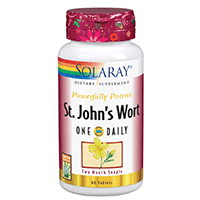
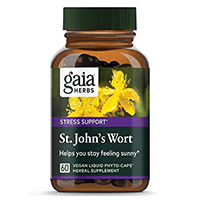
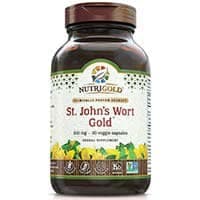
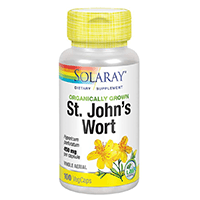
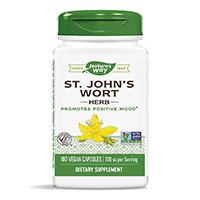
What St. John’s wort supplements are (and why this category needs pharmacist-level caution)
St. John’s wort (Hypericum perforatum) is a flowering plant sold in capsules and tablets—often standardized around hypericin and/or hyperforin—and marketed for low mood, stress, and sometimes sleep. It is also one of the most clinically consequential “herbs” in retail because it can accelerate drug metabolism (notably via CYP enzymes and transport proteins), reduce effectiveness of critical medicines (including some hormonal contraceptives), and interact dangerously with serotonergic drugs.
This page is educational, not medical advice. If you take prescription medications, hormonal contraception, immunosuppressants after transplant, anticoagulants, anticonvulsants, HIV therapies, cancer therapies, or antidepressants, treat St. John’s wort as a hard stop until a pharmacist or clinician reviews your full list—not as a gentle “natural mood boost.”
How to use this guide
The shortlist rewards transparent standardization language, conservative interaction disclosure, credible manufacturing and contaminant testing, and brands that do not bury pharmacology behind influencer calm aesthetics. The sections below help you understand extract standardization without treating a label like a prescription, and they steer you toward safer adjacent categories when polypharmacy makes St. John’s wort objectively inappropriate.
If you are comparing other serotonergic-adjacent supplements, read 5-HTP as a warning label for stacking instincts: combining multiple serotonin-affecting products with St. John’s wort is how people build serotonin syndrome risk stacks without realizing it. If your mood shopping is more “methylation donor” than “herbal SSRI-adjacent,” SAM-e is a different lane with its own interaction and mania-risk conversations—still not “just a vitamin,” but a useful contrast for what you think you are buying. If your primary symptom target is sleep rather than mood chemistry, valerian root is a frequent herbal neighbor where sedation stacking and medication timing still matter, even if the interaction map differs.
What to look for on a St. John’s wort label
Standardization that actually names the marker
Serious products usually reference a studied extract identity or clearly state marker compounds (for example hypericin/hyperforin ranges tied to batch testing). “Proprietary mood blend” is a shopping penalty in this category.
Dose discipline and “more is calmer” fallacy
Higher doses can increase side effects (GI upset, sedation, photosensitivity) without increasing wisdom.
Interaction reality, not marketing footnotes
Retail pages love tiny interaction disclaimers; your real-world risk depends on your entire medication and supplement list, including things you forgot to mention because they felt routine.
Quality and batch consistency
Herbal extracts vary by harvest and processing. Third-party testing language matters—especially for contaminants and potency drift.
Who St. John’s wort may be appropriate for (and who should not touch it)
Potentially reasonable only when
- You are not on interacting prescriptions and a clinician agrees it is worth a cautious trial.
- You can tolerate common side effects and you stop if mania, severe anxiety, or allergic symptoms appear.
- You understand photosensitivity risk and sun protection basics.
High-risk situations—default to “no retail self-start”
- Antidepressants, triptans, linezolid, tramadol, and other serotonergic drugs—serotonin syndrome is not rare enough to ignore.
- Hormonal contraception—reduced efficacy has been documented in human data contexts; do not gamble fertility planning on a capsule.
- Transplant immunosuppression, HIV antiretrovirals, oral oncology regimens—metabolism induction can be catastrophic.
- Bipolar disorder history—mood switches toward mania are a known concern class-wide for mood-altering botanicals and supplements.
Evidence expectations: mild depression trials versus your individual chemistry
Some trials support benefit in mild-to-moderate depression for certain standardized extracts, but “mild depression” is a clinical diagnosis boundary, not a self-label after a hard week. Effect sizes vary, study designs vary, and retail products are not guaranteed to match what was studied. A sane buyer stance is: medical evaluation first for persistent mood symptoms, and supplement trials only where interactions and bipolar risk have been thoughtfully ruled in or out.
Compare two St. John’s wort labels in 60 seconds
- Step 1: extract identity and standardization markers stated?
- Step 2: serving equals what you intend to take daily?
- Step 3: full ingredient list for hidden blends?
- Step 4: credible testing language?
- Step 5: brand avoids implying it replaces antidepressants?
Common mistakes that waste money—or create danger
- Starting St. John’s wort while secretly staying on an SSRI because withdrawal sounded hard.
- Assuming “herbal” means pharmacy interactions do not apply—this herb behaves like a drug in the real world.
- Stacking multiple mood powders without reading every panel.
- Treating contraception like a lifestyle add-on rather than a pharmacology system St. John’s wort can perturb.
- Ignoring new mania, panic, or agitation as “detox.”
What to monitor in the first 2–6 weeks
Track mood trend, sleep, anxiety, GI tolerance, and skin sun sensitivity. Seek urgent care for confusion, fever, sweating, tremor, diarrhea, or muscle rigidity after new combinations—possible serotonin syndrome. If mood lifts too fast with reduced sleep need, grandiosity, or reckless impulses, stop and contact a clinician—possible mood switch.
FAQs
How long does St. John’s wort take to work?
Trials often run weeks, not days; impatience drives dangerous stacking.
Can I drink alcohol with St. John’s wort?
Alcohol adds sedation and judgment impairment; it is not a neutral mixer with mood-altering supplements.
Does St. John’s wort cause sunburn?
Photosensitivity is a known risk class—sun protection and dermatology input matter for fair skin and high UV exposure.
Is St. John’s wort safe in pregnancy?
Default to clinician guidance; retail marketing is not evidence of fetal safety.
Can I stop antidepressants and switch to St. John’s wort?
That is a medical taper and interaction decision, not a supplement swap.
How we shortlist products on this page
We prioritize standardization transparency, interaction honesty, manufacturing credibility, and brands that do not market this herb like chamomile. For how we evaluate products across the site, read our methodology.
Bottom line
St. John’s wort is not a casual “stress herb.” It behaves like a serious pharmacologic actor for many patients—sometimes helpful in narrow contexts, sometimes dangerous with common prescriptions. The best purchase is the one your medication list permits, the one your clinician would not facepalm at, and the one you can stop immediately if psychiatric red flags appear.
If mood symptoms include suicidal thoughts, psychosis, postpartum crisis, or rapid functional collapse, supplements are the wrong tool—emergency and psychiatric care are the correct escalation.