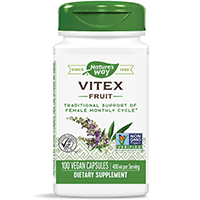
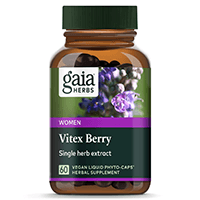
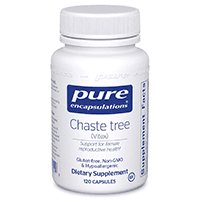
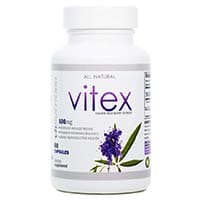
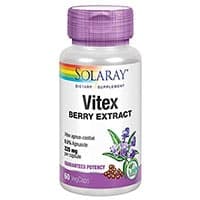
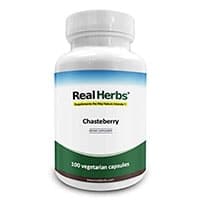
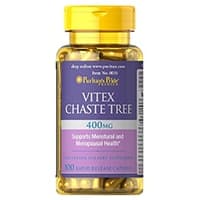
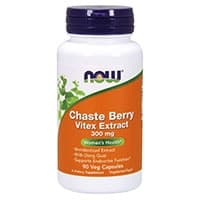
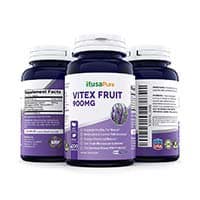
Why people shop vitex supplements
Vitex (also called chaste tree berry, typically Vitex agnus-castus) is one of the most commonly searched herbal categories for cycle support, PMS-related comfort, and hormone-routine consistency. Many people come to vitex after frustrating months of irregular cycles, mood shifts, breast tenderness, or luteal-phase discomfort. That motivation is valid — but this category is often marketed in a way that makes it sound faster and simpler than it really is.
In practical use, vitex is usually a patience-and-consistency supplement, not an immediate “feel it today” product. It often requires a structured trial window, clean symptom tracking, and realistic expectations. Product quality also matters more than many shoppers realize: two bottles may both say “vitex berry” while differing in extract standardization, serving size, and reliability.
This guide is educational and not medical advice. If you are pregnant, breastfeeding, trying to conceive under fertility treatment, have hormone-sensitive conditions, pituitary disorders, or use hormonal medications (including birth control, HRT, or dopamine-related medications), consult a qualified clinician before using vitex.
How to use this guide
Use the ranked list as a quality-and-fit filter, not a diagnosis or treatment protocol. Start by deciding your core goal:
- PMS/cycle comfort support with a consistent daily routine
- Cycle-regularity tracking support alongside clinician-aware planning
- Hormonal-stack simplification if you currently use too many overlapping products
Then keep your trial simple. Vitex works poorly as part of a “change everything this month” approach. If you adjust caffeine, sleep schedule, diet, stress load, and three hormone-adjacent supplements at once, you won’t know what changed what.
If you’re comparing adjacent categories in similar women’s-health routines, review our evening primrose oil supplements guide for cycle-comfort support with a different mechanism, our red clover extract supplements guide for menopause-adjacent phytoestrogen-positioned options, and our vitamin B6 supplements guide for nutrient support often paired in PMS routines.
For complete site-wide ranking logic and product-evaluation standards, see our methodology.
Who this category is for (and who should avoid DIY use)
Usually a better fit for
- Users with mild-to-moderate cycle discomfort who can run a steady multi-cycle trial.
- People willing to track symptoms by cycle phase instead of day-to-day noise.
- Shoppers prioritizing standardized extracts over vague “female balance” marketing.
Usually a poor fit for unsupervised use
- Anyone on hormonal contraception or fertility medications without clinician guidance.
- Users with significant abnormal bleeding or severe pelvic pain without diagnosis.
- People expecting immediate cycle reset within days.
How to compare two vitex labels in 60 seconds
- Step 1: Confirm species and ingredient identity: Vitex agnus-castus fruit/berry extract.
- Step 2: Confirm extract amount and standardization disclosure (if provided).
- Step 3: Confirm serving frequency and whether it is practical daily.
- Step 4: Check if product is standalone or mixed with multiple hormone-active botanicals.
- Step 5: Check warnings around hormonal meds, pregnancy, and fertility context.
If the label is vague on extract details and caution statements, skip it.
What to look for in a vitex supplement
Standardized extract transparency
Reliable products clearly identify vitex extract amount and any marker-standardization detail. This improves consistency and gives you a clearer basis for comparing products.
Single-ingredient vs hormone blends
Many formulas combine vitex with maca, dong quai, DIM, or adaptogens. Blends can look comprehensive but make side-effect interpretation harder. For first-time users, simple vitex-only formulas usually produce cleaner data.
Daily timing consistency
Whatever timing you choose, keep it consistent. The key with vitex is routine stability over weeks to months, not constant protocol tweaking.
Trial length realism
Expect meaningful evaluation across at least one to three cycle windows depending on your context and clinician advice. Rapid judgments after a few days usually lead to poor decisions.
Medication and fertility-treatment context
If conception planning or fertility treatment is involved, this category should be clinician-coordinated. Do not layer vitex into protocol-sensitive treatment plans without guidance.
Common mistakes that waste money (or delay better care)
- Expecting immediate effects in the first week. This category usually needs time and consistency.
- Stacking multiple hormone-active products simultaneously. This reduces clarity and can increase adverse effects.
- Ignoring severe or worsening symptoms. Heavy bleeding, severe pain, or major mood changes need evaluation.
- Buying by marketing language only. “Hormone harmony” means little without extract transparency.
- Changing protocol every cycle. Inconsistent routines produce inconsistent conclusions.
What to monitor in your first 2-4 weeks (and beyond)
If your clinician supports a trial, track:
- Cycle-phase symptoms: PMS severity, breast tenderness, mood swings, cramp pattern.
- Cycle timing trends: regularity patterns over multiple cycles.
- Tolerance: GI response, headaches, skin changes, mood shifts.
- Stack overlap: avoid adding new hormone-active supplements mid-trial.
- Adherence quality: can you follow daily timing consistently?
If symptoms worsen significantly or bleeding/pain patterns become concerning, stop and seek clinical guidance.
FAQs
What is vitex used for in supplements?
Vitex is most commonly used for PMS and cycle-support routines. It is not a replacement for diagnosis of endocrine, gynecologic, or fertility conditions.
How long does vitex take to work?
Many users evaluate over multiple weeks or cycles rather than days. Consistency and realistic timelines are important.
Can I use vitex while on birth control?
That is a clinician-level decision. Because this category is hormone-adjacent, do not self-combine with hormonal therapies without guidance.
What side effects are commonly discussed?
Some users report GI discomfort, headaches, skin changes, or mood shifts. Individual response varies by dose and context.
Can I combine vitex with maca or evening primrose?
Possible, but it is usually better to introduce one variable at a time to preserve interpretability.
Is vitex safe during pregnancy?
Do not self-prescribe in pregnancy. Use only under qualified prenatal/clinical guidance.
How long should I trial one product before switching?
If medically appropriate, stay with one transparent product long enough to evaluate across at least one meaningful cycle window.
Bottom line
Vitex supplements can be useful for some cycle-support routines, but this is a category where consistency, timeline discipline, and safety context matter more than hype. The best product is usually one with clear extract disclosure, simple formula design, and practical daily use.
Keep your protocol focused, track cycle-phase outcomes, and involve your clinician whenever fertility plans, hormonal medications, or significant symptoms are in play.