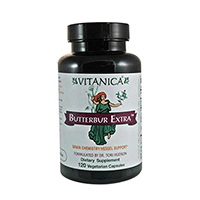
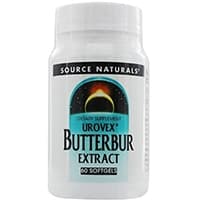
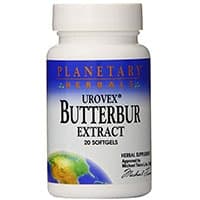
Why people shop butterbur supplements
Butterbur (commonly Petasites hybridus) is most often discussed in headache and migraine-support conversations, and sometimes in seasonal allergy routines. It has a strong legacy in herbal medicine, but it is also one of the few supplement categories where safety screening is absolutely central to product choice. In practical terms, this is not a “buy whatever is cheapest” category.
The key issue: raw butterbur naturally contains compounds called pyrrolizidine alkaloids (PAs), which can be harmful to the liver and are not acceptable in consumer products unless specifically removed. That means the best butterbur product is not just the one with the best price or review count — it is the one that clearly states it is PA-free and provides credible quality transparency.
This guide is educational and not medical advice. If you have liver disease, use hepatotoxic medications, are pregnant/breastfeeding, or have significant chronic conditions, discuss butterbur with a qualified clinician before use. If a product cannot clearly demonstrate PA-free processing, do not use it.
How to use this guide
Use the ranked list as a safety-and-fit filter, not as a treatment protocol. Start with one clear objective:
- Headache/migraine-support adjunct within a broader clinician-guided plan
- Seasonal comfort support in a conservative short-term routine
- Stack simplification if your current protocol has too many variables
Then choose a product that meets strict safety transparency first, and dosing practicality second. If you cannot verify PA-free status and quality controls, it is not a reasonable purchase regardless of marketing claims.
If you’re comparing adjacent headache-support categories, see our feverfew supplements guide for another preventive-style botanical lane, our magnesium supplements guide for foundational nutrient support often used in headache routines, and our CoQ10 supplements guide for a different mechanism category used in similar stack planning.
For full product ranking criteria and quality standards across the site, review our methodology.
Who this category is for (and who should avoid DIY use)
Usually a better fit for
- Users who understand PA-free requirements and can verify label credibility.
- People running a structured, monitored routine rather than a random supplement experiment.
- Shoppers who prioritize safety documentation over “strongest formula” marketing.
Usually a poor fit for unsupervised use
- Anyone unable to verify PA-free status with confidence.
- Users with liver-risk context or medication complexity without clinician review.
- People expecting immediate rescue of severe headache symptoms without medical evaluation.
How to compare two butterbur labels in 60 seconds
- Step 1: Confirm clear “PA-free” claim on the product, not implied language.
- Step 2: Confirm butterbur extract amount and standardization details.
- Step 3: Confirm intended use pattern (daily preventive vs occasional use instructions).
- Step 4: Check quality controls/manufacturing transparency.
- Step 5: Check safety cautions for liver context, pregnancy, and medication overlap.
If any of these are unclear, skip the product.
What to look for in a butterbur supplement
PA-free verification is non-negotiable
This is the defining criterion. Butterbur products that do not clearly verify PA removal should not be used. In this category, safety proof is more important than price or convenience.
Extract standardization and dose clarity
You want exact extract amount per serving and clear dosing guidance. Vague “head comfort blend” products are hard to compare and often hide important details.
Standalone formulas vs blend complexity
Many headache products combine butterbur with feverfew, magnesium, riboflavin, or herbal calming agents. Blends can be useful, but if you are verifying tolerance, standalone or clearly structured formulas usually produce cleaner feedback.
Routine realism and consistency
Headache-support routines usually need consistency over time. A complicated protocol with poor adherence will not provide clear results.
Medication and liver-context awareness
If you already use medications with liver or bleeding considerations, a pharmacist/clinician review is essential before starting.
Common mistakes that create unnecessary risk
- Buying butterbur without verified PA-free status.
- Using supplements to delay workup of severe/new neurological symptoms.
- Stacking multiple headache products on day one.
- Ignoring sleep, hydration, trigger management, and stress fundamentals.
- Switching brands too quickly to evaluate meaningfully.
What to monitor in your first 2-4 weeks
If your clinician supports a trial, track:
- Headache frequency: total headache days/week.
- Intensity and function impact: practical effect on work/sleep/exercise.
- Tolerance: GI symptoms, fatigue, skin reactions, unusual symptoms.
- Routine consistency: dose timing, hydration, sleep regularity.
- Escalation signs: any concerning systemic symptoms should prompt immediate review.
If you notice possible liver-related symptoms (unusual fatigue, dark urine, jaundice-like changes, upper-right abdominal pain), stop and seek urgent medical guidance.
FAQs
What is butterbur used for in supplements?
It is most commonly used in headache/migraine-support and seasonal-support routines. It is not a replacement for diagnosing serious neurological or allergic conditions.
Why is PA-free so important?
Because raw butterbur can contain liver-toxic pyrrolizidine alkaloids. Only products that clearly verify PA removal should be considered.
Can I take butterbur every day?
Some preventive-style routines use daily dosing, but this should be clinician-aware and based on transparent PA-free products only.
What side effects are commonly discussed?
Possible issues can include GI discomfort, fatigue, or allergy-type symptoms in some users; response varies by product and individual context.
Can I combine butterbur with feverfew or magnesium?
Possible, but add one major variable at a time for cleaner interpretation and safety tracking.
Should pregnant or breastfeeding users take butterbur?
Not without explicit clinician direction. This is not a casual category in pregnancy/lactation contexts.
How long should I trial one product?
If medically appropriate, use one clearly PA-free, transparent product consistently for several weeks before making decisions.
Bottom line
Butterbur can be a useful category for some users in headache-support routines, but it is a safety-sensitive category where product verification is everything. The best product is one that is clearly PA-free, transparently labeled, and used in a structured, monitored routine.
Keep your protocol simple, track objective outcomes, and prioritize medical evaluation for red-flag symptoms. In this category, caution and quality control matter more than any marketing claim.