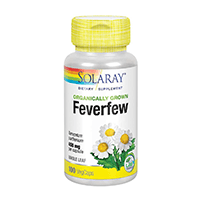
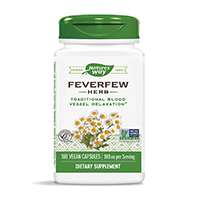
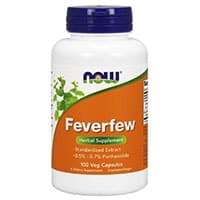
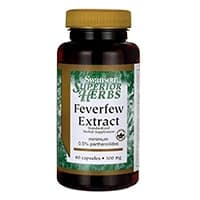
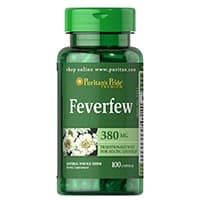
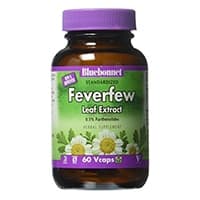
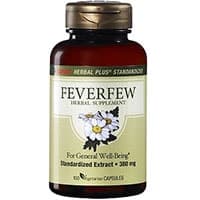
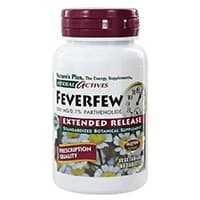
Why people shop feverfew supplements
Feverfew (Tanacetum parthenium) is a classic botanical category most often explored in migraine-support and headache-frequency routines. Many shoppers discover it after trying general “wellness” products that didn’t move the needle, and then look for a more targeted option. That is a reasonable path — but feverfew is not a quick rescue product, and the category is easy to misuse when labels are vague or users expect immediate symptom reversal.
The practical value of feverfew usually depends on three things: extract standardization, consistency of use, and realistic monitoring. If those are missing, most users either quit too quickly or overstack with other headache products and lose the ability to interpret what is helping.
This guide is educational and not medical advice. If you have severe headaches with neurological symptoms, sudden “worst headache of life,” vision changes, weakness, speech changes, pregnancy, bleeding disorders, or anticoagulant/antiplatelet medication use, seek medical guidance before using feverfew. Urgent red-flag symptoms need emergency care, not supplement trial-and-error.
How to use this guide
Use the ranked products as a quality-and-fit filter, not as a treatment protocol. Start with one clear goal:
- Headache frequency support in a prevention-style routine
- Migraine-support adjunct under clinician awareness
- Stack simplification if your current protocol has too many variables
Feverfew tends to make more sense as a consistent routine ingredient than as a one-off “pain now” product. If your plan is a short trial with frequent brand changes, you are unlikely to get useful signal.
If you’re comparing adjacent categories often used in similar support routines, see our magnesium supplements guide for foundational support often discussed in headache protocols, our riboflavin supplements guide for nutrient-based migraine-adjacent planning, and our butterbur supplements guide for another botanically positioned category (with its own important safety considerations).
For complete ranking criteria and site-wide product evaluation standards, see our methodology.
Who this category is for (and who should avoid DIY use)
Usually a better fit for
- Users who want a structured preventive-support trial with daily consistency.
- People willing to track headache frequency and intensity over several weeks.
- Shoppers who prioritize standardized extract quality over generic “head comfort” blends.
Usually a poor fit for unsupervised use
- Anyone with new severe neurological headache symptoms needing immediate clinical workup.
- Users on anticoagulants/antiplatelets or with bleeding-risk concerns without clinician review.
- People expecting feverfew to replace diagnosis, trigger management, and prescribed migraine care.
How to compare two feverfew labels in 60 seconds
- Step 1: Confirm botanical identity: Tanacetum parthenium.
- Step 2: Confirm extract amount and any parthenolide standardization details.
- Step 3: Check serving schedule and whether it supports daily consistency.
- Step 4: Check if product is standalone or hidden in proprietary headache blends.
- Step 5: Check medication cautions and quality/manufacturing transparency.
If the label is unclear on standardization and dosing, skip it.
What to look for in a feverfew supplement
Standardized extract clarity
Strong products disclose meaningful feverfew extract details and, when claimed, standardized marker information. This matters in a category where product consistency affects trial quality.
Standalone formula vs headache blends
Many formulas combine feverfew with magnesium, riboflavin, CoQ10, or other ingredients. Convenience can be useful, but first-time users often benefit from cleaner single-variable testing.
Dose practicality and adherence
Daily consistency is more important than occasional high-dose use. Choose a product whose serving schedule is easy to maintain even on stressful days.
Tolerance profile and oral sensitivity
Some users report GI upset or oral irritation with certain product forms. If tolerance is poor, reassess format and discuss with a clinician rather than forcing continuation.
Medication and bleeding context
Because feverfew may interact with bleeding-risk context in some users, medication review is important before use in sensitive populations.
Common mistakes that waste time (and may increase risk)
- Using feverfew as an acute rescue for severe attacks. This category is typically considered in preventive-style routines.
- Changing products every week. Frequent switching ruins interpretability.
- Stacking multiple headache supplements at once on day one.
- Ignoring trigger management basics. Sleep, hydration, meal timing, stress, and light exposure often drive outcomes.
- Delaying medical evaluation of red-flag headache patterns.
What to monitor in your first 2-4 weeks
If your clinician supports a trial, track:
- Headache frequency: number of days affected per week.
- Intensity and duration: not just “better/worse” but practical function impact.
- Rescue-med use trend: any change in acute-med dependence.
- Tolerance: GI response, oral sensitivity, unusual bruising, or other concerns.
- Adherence quality: can you maintain consistent daily use without routine friction?
Stop and seek medical guidance for concerning side effects, worsening neurological symptoms, or major pattern shifts.
FAQs
What is feverfew used for in supplements?
It is most commonly marketed for headache and migraine-support routines, especially in preventive-style supplementation contexts.
Is feverfew a painkiller?
Not in the same way as acute pain medications. It is generally discussed as a routine-support ingredient rather than immediate attack rescue.
Can I take feverfew every day?
Some users do in structured routines, but daily use should be clinician-aware if medications or medical complexity are involved.
What side effects are commonly discussed?
Possible issues include GI discomfort, oral irritation (in some forms), and sensitivity concerns; response varies by individual and formulation.
Can I combine feverfew with magnesium and B2?
Many protocols do, but introduce changes gradually so you can interpret results and tolerance clearly.
How long should I trial one product?
If medically appropriate, run a consistent multi-week trial before deciding. Rapid switching leads to unreliable conclusions.
Can feverfew replace migraine medication?
No. It can be an adjunct in some contexts, but prescribed care and clinical management remain primary.
Bottom line
Feverfew supplements can be useful in structured headache-support routines when labels are transparent, expectations are realistic, and daily use is consistent. The best product is usually one with clear extract standardization, practical dosing, and strong safety transparency.
Keep your protocol simple, track meaningful headache metrics, and prioritize medical review for red-flag symptoms. In this category, disciplined monitoring beats trial-and-error stacking.